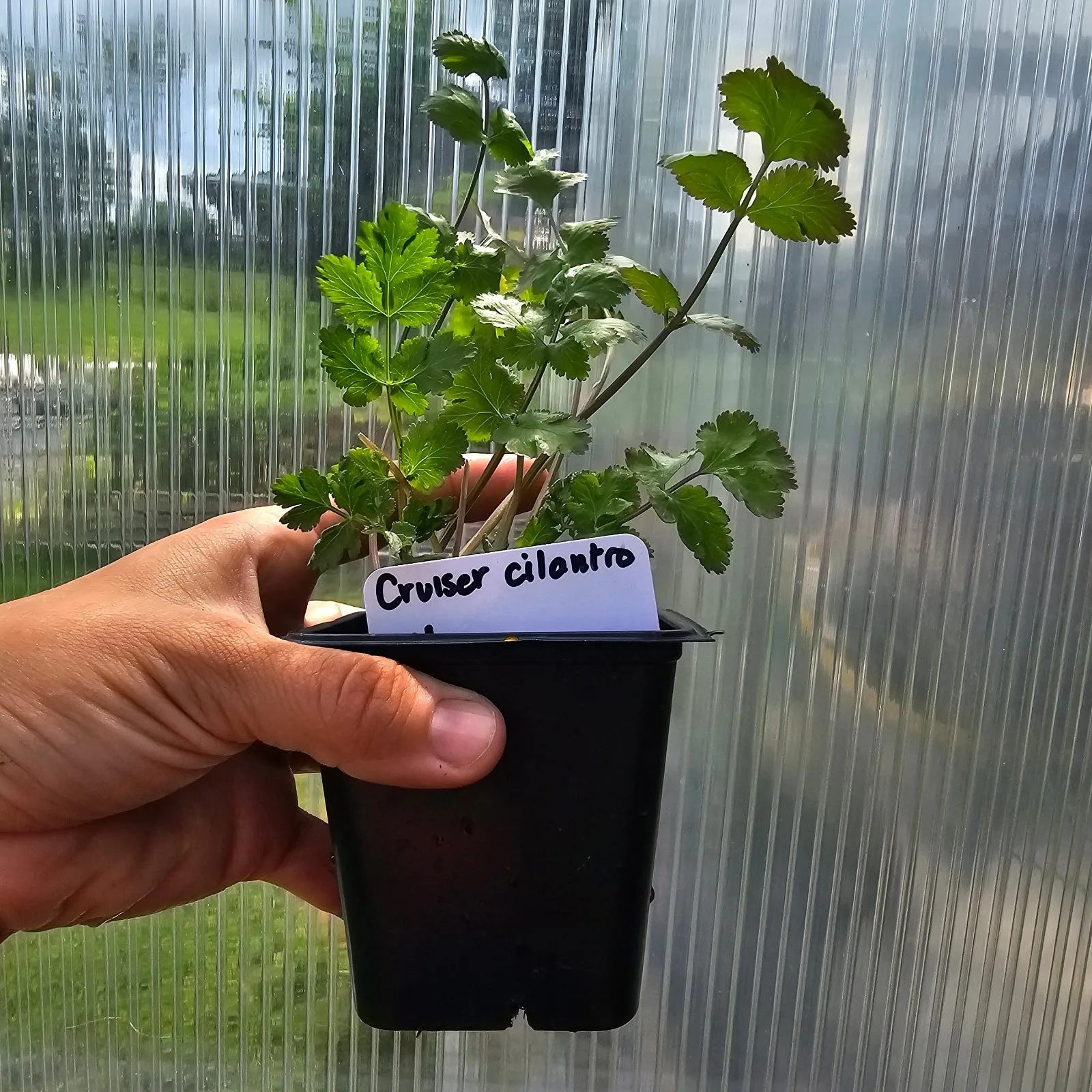
Cilantro, Potted Herb
Cilantro is an annual herb with two main edible parts: the fresh leaves, known as cilantro in North America, and the dried seeds, called coriander. It's a cool-season plant that thrives in full sun with well-drained soil, requiring consistent moisture but not waterlogging. To harvest leaves, snip them as needed, but allow plants to flower and go to seed for the aromatic, spicy seeds, which are ready when the seed heads turn brown and dry. We also offer papalo, an aromatic herb with edible leaves, also known as Bolivian Cilantro. It is more heat tolerant than standard cilantro varieties and is used as a flavorful seasoning in Mexican and South American cuisine, especially in salsas and tacos, offering a taste similar to cilantro mixed with arugula. This heat-loving annual thrives in warm climates, grows 1-3 feet tall. Butterfly Papalo: This fast-growing and powerfully flavored herb has been gaining increasing popularity in recent times. With its roots deep in Mexican culinary traditions, it’s often used sparingly and simmered into pots of beans during cooking to impart a distinctive, robust flavor. Often likened to cilantro but with a more pronounced flavor. Butterfly Papalo is sometimes described as cilantro on steroids due to its intense aroma and bold flavor profile. It is also notable for its grand garden appeal. The grey-blue leaves are shaped like delicate butterfly wings, lending an aesthetic charm to beds, borders, pots, and containers. However, unlike cilantro, which tends to bolt and go to seed quickly in hot weather, this pungent beauty thrives in the heat, making it a reliable choice for gardeners in warm climates. This round leaf form is prevalent in Mexico but also very popular in Bolivia, and can be used both raw for their freshness in salads and salsas or cooked into soups and sauces to add depth and flavorful twists to meals. These plants are hardy and resistant to extremely high temperatures and are relatively pest resistant. Harvest leaves as required once plants reach about 8 to 10 inches in height. Harvesting leaves close to the central stem will encourage continuous growth. Narrow-Leaf Papalo: If you’re a lover of cilantro, this aromatic herb is for you. The seeds of this lesser-known variety of papalo, a pungent herb native to Central and South America, prized for its strong flavor profile, were passed to us by Botanical Explorer Joseph Simcox. The slender, delicate leaves of this variety boast a robust scent and savory flavor akin to cilantro, ideal for home cooks and chefs looking to use its distinctive essence. Also known as Quilquina, this type is believed to have originated in the sprawling fertile plains of Bolivia. The leaves can be used both raw for their freshness in salads and salsas or cooked into soups and sauces to add depth and flavorful twists to meals. If you’re looking to experiment with an exciting new herb, then we highly recommend growing this sweet-smelling rare South American plant. Ideal for warm climates with well-drained soil, it grows equally as well in pots and containers. These plants are robust and resistant to extremely high temperatures and are relatively pest resistant. Harvest leaves as required once plants reach about 8 to 10 inches in height. Harvesting leaves close to the central stem will encourage continuous growth.
If you’re a lover of cilantro, this aromatic herb is for you. The seeds of this lesser-known variety of papalo, a pungent herb native to Central and South America, prized for its strong flavor profile, were passed to us by Botanical Explorer Joseph Simcox. The slender, delicate leaves of this variety boast a robust scent and savory flavor akin to cilantro, ideal for home cooks and chefs looking to use its distinctive essence. Also known as Quilquina, this type is believed to have originated in the sprawling fertile plains of Bolivia. The leaves can be used both raw for their freshness in salads and salsas or cooked into soups and sauces to add depth and flavorful twists to meals. If you’re looking to experiment with an exciting new herb, then we highly recommend growing this sweet-smelling rare South American plant. Ideal for warm climates with well-drained soil, it grows equally as well in pots and containers. These plants are robust and resistant to extremely high temperatures and are relatively pest resistant. Harvest leaves as required once plants reach about 8 to 10 inches in height. Harvesting leaves close to the central stem will encourage continuous growth.
$5.00
$4.50for members →Reviews
Review after delivery.

More from Brokaw's Farm & Market


Bold mix of edible flowers, such as dahlias, snapdragons, nasturtiums, calendula, marigolds, petunias, and much more!
$6.00
$5.50 member


Flowering thyme features a delicate, sweeter, and more floral taste than the green leaves. It delivers a pungent herbaceous punch mixed with light citrus, herbal, and piney notes. The tiny, edible blossoms are excellent for adding subtle flavor and visual appeal to salads, dressings, and baked goods.
$4.00
$3.50 member


An heirloom flat-leaf variety renowned for its large, dark green leaves and bold, aromatic flavor. Growing 18 to 20 inches tall on strong, upright stalks, it is favored by chefs over curly parsley for its rich, earthy taste.
$5.00
$4.50 member